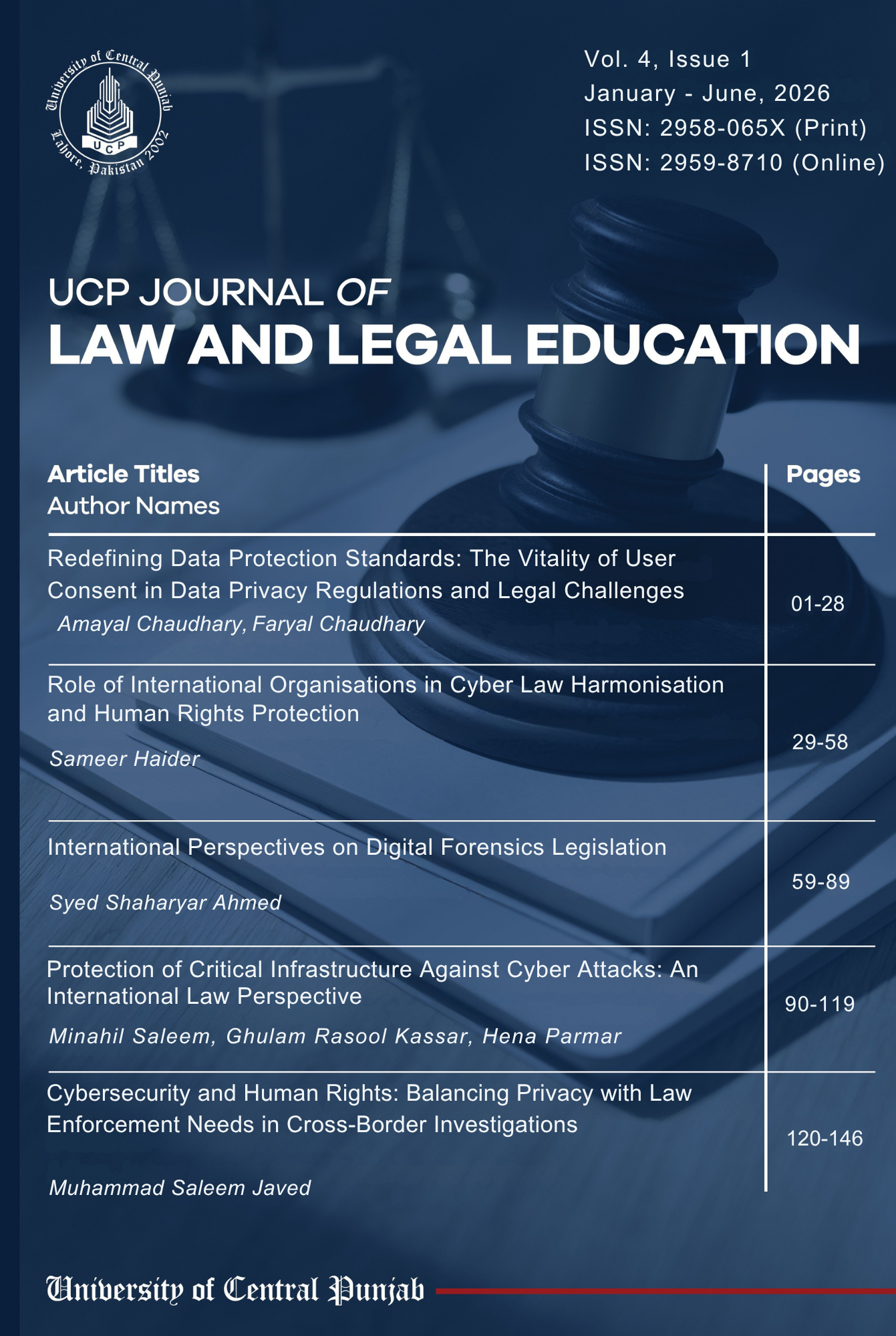
Redefining Data Protection Standards: The Vitality of User Consent in Data Privacy Regulations and Legal Challenges
DOI:
https://doi.org/10.24312/ucp-jlle.04.01.545Keywords:
Legal Challenges, User Consent, Data Privacy,, Data protection, Technological InnovationAbstract
Rapid global digitisation has created tensions between technological innovation and the protection of individual privacy rights. User consent has emerged as a central issue on this front. This paper reviews the effectiveness of existing consent mechanisms, assesses the confounding factors posed by emerging technologies, and discusses the ethical and legal ramifications of data privacy laws premised on consent. It investigates how technology influences user consent and offers recommendations to mitigate the identified harms. The research methodology is doctrinal, involving analysis of relevant legislative documents, leading case law, applicable enforcement frameworks, along with several secondary sources. The underlying ethical principles meant to inform consent compliance regimes are part of the review as well. The assessment has revealed a number of implementation deficits in existing consent frameworks. These include consent desensitisation, unclear or ineffective disclosure of algorithmic decisions, the rise of dark patterns, etc., which inhibit the ability of users to make truly free and autonomous decisions. Emerging technologies like Artificial Intelligence (AI) and the Internet of Things (IoT) exacerbate these problems and further strain user perception. The paper, therefore, recommends standardising data protection mechanisms with an emphasis on behavioural insights. It mandates the implementation of privacy-by-design principles and the elevation of enforcement measures to a level where user consent is treated as a substantive right.
Downloads
Published
Issue
Section
License
Copyright (c) 2026 UCP Journal of Law & Legal Education

This work is licensed under a Creative Commons Attribution 4.0 International License.