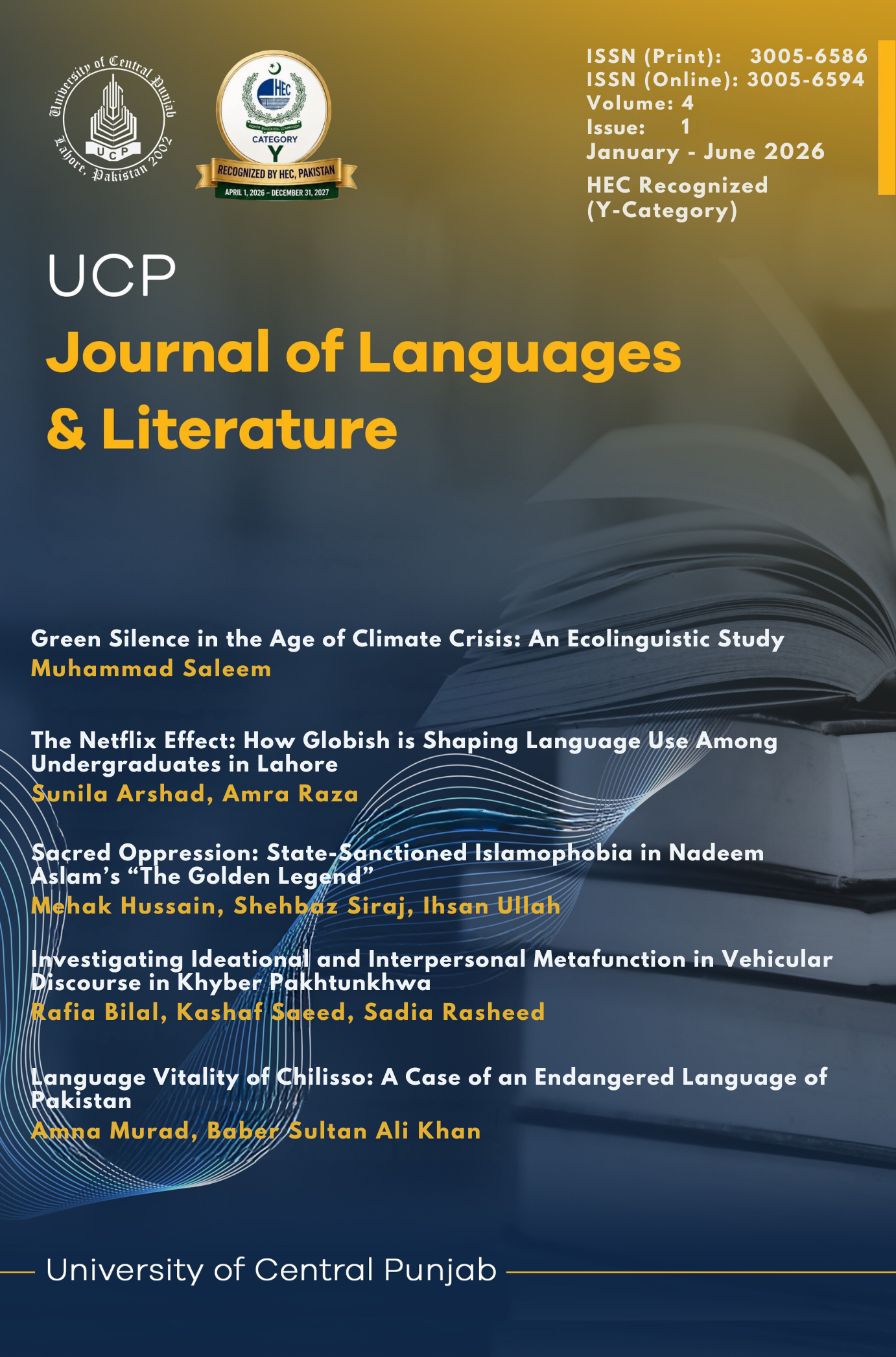
Language Vitality of Chilisso: A Case of an Endangered Language of Pakistan
DOI:
https://doi.org/10.24312/ucp-jll.04.01.945Keywords:
Endangered language, language vitality, language shift, language use, language attitudes, ChilissoAbstract
Endangered languages are a vital part of the world's linguistic heritage and their unique cultural and cognitive systems are under threat. Chilisso is a critically endangered Indo-Aryan language spoken in some pockets in District Kohistan in northern Pakistan. It is an undocumented language; about 500-600 people speak it, the majority of whom are elderly. The present sociolinguistic study aims to assess the linguistic vitality of Chilisso in Kohistan by focusing on two main factors: language use in different domains, and the attitude of speakers towards Chilisso. The study is based on a survey conducted in Dasu among 51 respondents of various age groups between 2024 and 2025 with the assistance of questionnaires. The results of the study indicate that the process of intergenerational transmission of the Chilisso language is low, and younger generation uses less Chilisso, shifting to Shina, which is one of the dominant languages of the region. The findings also hint at the less positive attitudes of the younger generation towards their ancestral language, as well as a continuous process of the shift to Shina in daily communication. This study can contribute some empirical data to the existing very limited literature on the Chilisso language and language use patterns, and can also fill part of the gap in the literature on the intergenerational transmission of the language in the Chilisso community. It also marks negative language attitudes towards Chilisso and the current shift to Shina, which provides insights that can contribute to future documentation efforts, language maintenance efforts, as well as policy planning of endangered languages in the region.
Downloads
Published
Issue
Section
License
Copyright (c) 2026 UCP Journal of Languages & Literature

This work is licensed under a Creative Commons Attribution 4.0 International License.